
Some Lessons From Iran War

This is a special article for the Fibralist Corner. I intend to comment on recent events through the lens of Fibralist ideology. To be fair, the war is not over yet; the situation evolves by the hour, oscillating between a ceasefire fraught with acts of war (such as mutual blockades) and negotiations, with Memorandum of Understanding being concluded, revised, or abandoned. Yet, certain lessons and observations can already be drawn from a Fibralist perspective. This is, after all, a major war within a digital culture. Its idiosyncrasies—specifically the fact that it is a long-distance, high-tech conflict—make it all the more compelling when analyzed through a Fibralist lens.
Topological aspects
From a fibralist perspective, the fact that none of the belligerents share a single mile of border is paramount. Indeed, the raison d’être of Fibralism is to shift from a territorial to a temporal understanding of the political landscape. This is because technology has rendered geographic barriers increasingly irrelevant. It is relatively easy to move around the world, and from an informational standpoint, the world is effectively flat.
This also holds true for power projection: the US military and the IDF can strike any building of their choosing within hours of target identification. Notably, much of this targeting is now facilitated by AI systems that assist military planners in prioritizing targets based on desired effects.
On the other side, Iran has demonstrated the capabilities of its vast “aeroballistic” arsenal—a blend of hypersonic ballistic missiles and drones of varying sophistication. While the Iranian Navy and Air Force have been largely neutralized, Iran has nonetheless conducted successful counter-attacks and inflicted significant material damage. Further evidence of the effectiveness of this mode of warfare is the distance the US fleet has been forced to maintain to avoid these strikes. This has complicated military operations and it has effectively prevented Carrier Strike Groups from entering the Persian Gulf. In the meantime, US bases in the region have been rendered inoperable: personnel and equipment have been evacuated, and the facilities themselves have sustained severe damage.
This underline the loss of continuity in war that was the hallmark of post industrial revolution wars. The front line was a relatively new idea implying the existence of a very precise zone where the fight is done and an industrial area behind the line of contact. Here in the Iran war there is no zone of contact. The strikes are not limited by geographical constraints but rather strategic ones: for instance Iran could destroy all desalination factories in the region or the US/Israel could destroy every power facility. The US could theoretically destroy every power facility in the country — and Trump explicitly threatened during Easter to erase Persian culture overnight, a declaration that, from a Fibralist perspective, reveals a fundamental category error: confusing the destruction of a state apparatus with the annihilation of a Fiber. The first is militarily conceivable. The second has never been achieved in recorded history by force alone. The questions that ensue are: why (if you destroy a country you have no gain) and what’s next (retaliation)? This calibration in escalation is not without reminding the exponential retaliation principle discussed in
A Fibralist Theory of Violence

This is piece is a preliminary reflection on the raw foundation of political organization in a digital society. A Fibralist theory of violence. If one accepts Carl Schmitt’s friend/enemy distinction as what politics is about, then a theory of violence is the how. From a purely abstract point of view, violence is the translation of a will, an idea, int…
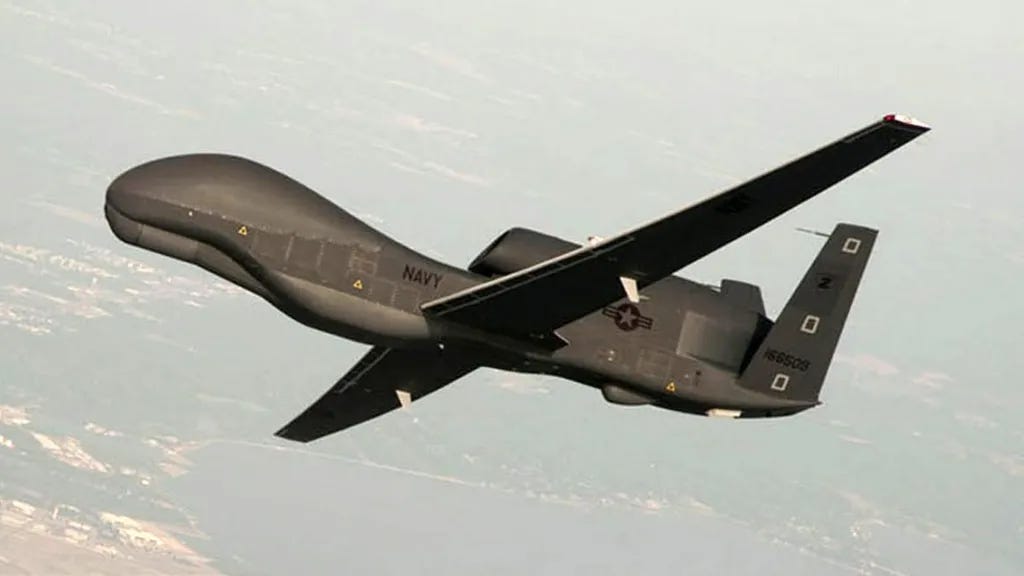
War: from industry to IT
What becomes clear is that kinetic and industrial superiority are not enough to prevail in this conflict. Paradoxically, despite the points discussed thus far, the war still relies on a critical physical constraint: the Strait of Hormuz. Iran has not attempted to compete with US and Israeli air and missile capabilities; instead, they have waged an asymmetric war centered on the geographic reality that one-fifth of the global oil supply—along with a significant volume of other critical goods—must transit through this narrow strait. By simply threatening to block it, Iran gains leverage of global magnitude; the price of oil alone is sufficient to trigger a major economic depression. This raises two points regarding Fibralism:
Resilience is a strategic asset.
“Forbidding” (denial) is as potent as active engagement.
Let us examine both points more thoroughly. Time is running out for both the US and Iran—and to a lesser extent, Israel. However, a major difference is that the US is not fighting for its survival, whereas the US midterm elections approaching in November introduce a different kind of pressure. Conversely, no one is realistically challenging the Mullahs’ regime; for them, the tempo is dictated by the economy (or the lack thereof). It appears that resilience plays into Iran’s hands: the power structure is unlikely to change within the foreseeable horizon, whereas the US will see a new administration within two years.
”Forbidding” is easier because it leverages network effects. Blocking the Strait of Hormuz is remarkably cheap from a military perspective: one need only damage a tanker or two and threaten to mine the strait. Insurance companies will then effectively shut down the passage for you. Compare this to a “regime change” strategy via aerial bombardment. Killing top leadership is insufficient; the entire administrative apparatus remains intact, with new leaders ready to step in. It is not as if Iran has not been preparing for this war for over two decades. But the contrast is clear: if you want to achieve regime change, you must provide an alternative bureaucracy. This is possible—think of post-WWII Japan or Germany—but it requires massive investment and a long-term military presence. Again, compare this to dropping three mines from a fishing boat. In fact, you may not even need to carry out the act; merely claiming to have done so can be enough.
It is their combination that has prevented Iran’s defeat, defying the odds calculated by statisticians rooted in a post-industrial, yet legacy-bound, society. The cohesiveness of Persian society—and I use this term precisely to encompass more than just the state apparatus—was coupled with the disruptive capabilities provided by technology (drones, missiles, and various semi-autonomous weapons). Even the world’s most powerful navy lacks a kinetic solution to this problem. Cheap drones must be intercepted by multi-million-dollar missiles, rendering the fight asymmetrical even from an economic standpoint. Another dimension of this asymmetry is that drones can be mass-produced rapidly, while interceptors require months or years to manufacture.
The first point aligns directly with Fibralist ideology. The primary aim of a Fibralist society is to provide stability in an environment characterized by constant, rapid flux. The inherent power and importance of this stability are clearly demonstrated by the outcome of this war.
The second point is linked to the Fibralist philosophy of defense. In a Fibralist society, defense is based on deterrence and the proportionate (yet exponentially escalatory) use of force to punish adversaries. A core strength of a Fibralist society is its long-term memory; adversaries know that retaliation is inevitable. From this perspective, “forbidding” (denial) is more effective than traditional offensive capabilities. The goal is not to conquer territory through the use of armed forces, but rather to make adversaries pay—a strategy best realized through via negativa.
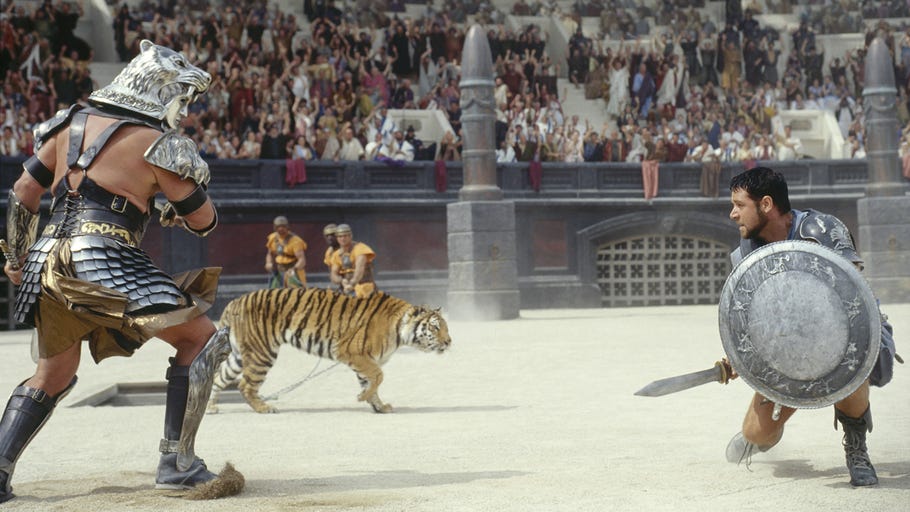
Resilience
What this war ultimately demonstrates is that the future of conflict belongs neither to the largest army nor to the most advanced technology, but to the most cohesive culture. Iran did not win — the war is not over — but it has not been defeated, and this alone constitutes a strategic victory against overwhelming kinetic odds. Another point is that the mosaic strategy used by Iran is much more akin to digital culture than the commander-in-chief ordering a strike from above which is the most perfect expression of institutional power as conceived by written culture: hierarchical, legible, and ultimately too rigid and frail.
The lesson for Fibralism is clear: resilience is not a passive quality but an active architecture. A Fiber that has internalized its own defense — culturally, institutionally, and materially — does not need to win. It needs only to make the cost of attacking it perpetually higher than any conceivable gain. A war that began as a contest of kinetic power has revealed itself as a contest of cultural endurance. This is the ultimate expression of via negativa as a doctrine of power: not the force that conquers, but the force that cannot be extinguished.